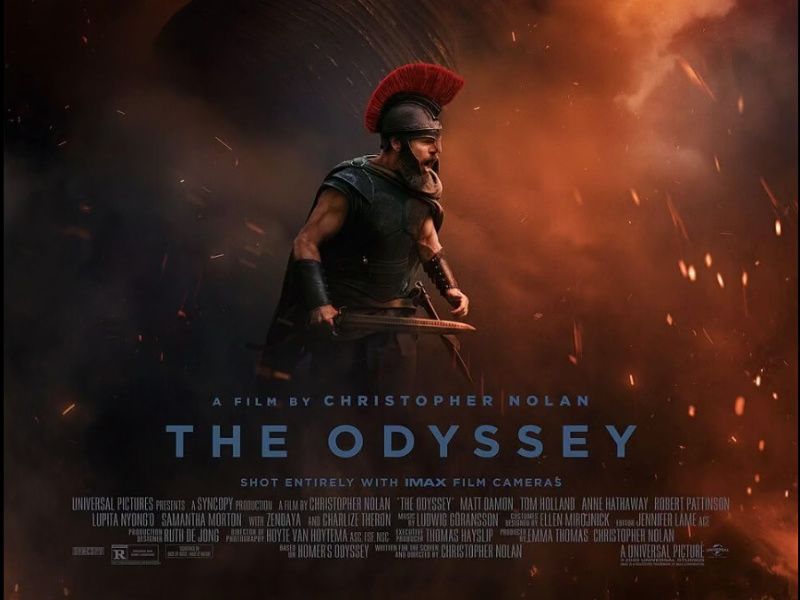
Watching The Odyssey in 2026 Through Congolese Eyes: A Story of Home, Exile and the Long Journey Back
There is something strangely familiar about watching The Odyssey as a Congolese person.
On the surface, this is a story that could not feel further removed from the Democratic Republic of Congo. We are transported to the ancient Mediterranean world of Greek mythology, following Odysseus as he attempts to return home after the Trojan War. There are kings, warriors, gods, monsters and legendary journeys across the sea.
And yet, underneath all of that spectacle, The Odyssey tells a much simpler story: a man is away from home, and he desperately wants to return.
For many Congolese people, especially those living in the diaspora, that feeling needs no explanation.
The Odyssey Is Really a Story About Home
Odysseus spends 10 years trying to get back to Ithaca.
The journey changes him. The world around him changes. His family continues living without him. And the longer he stays away, the more complicated the idea of “home” becomes.
That immediately feels relevant from a Congolese perspective.
There are Congolese communities across Belgium, France, the United Kingdom, Canada, the United States, South Africa and many other parts of the world. Some left Congo themselves. Others were born abroad and inherited Congo through their parents, grandparents, food, music, language and family stories.
For many of us, “home” is not a simple geographical answer. You can build a complete life abroad and still feel something when the plane lands in Kinshasa. You can complain about Kinshasa traffic for three hours and somehow miss it two weeks later. You can feel completely Congolese abroad and suddenly realise, once you are back in Congo, that you have also changed.That contradiction is one of the reasons The Odyssey resonates.
The journey home is rarely just about reaching a place. It is about figuring out whether the place you remember still exists, and whether the person returning is still the same person who left.
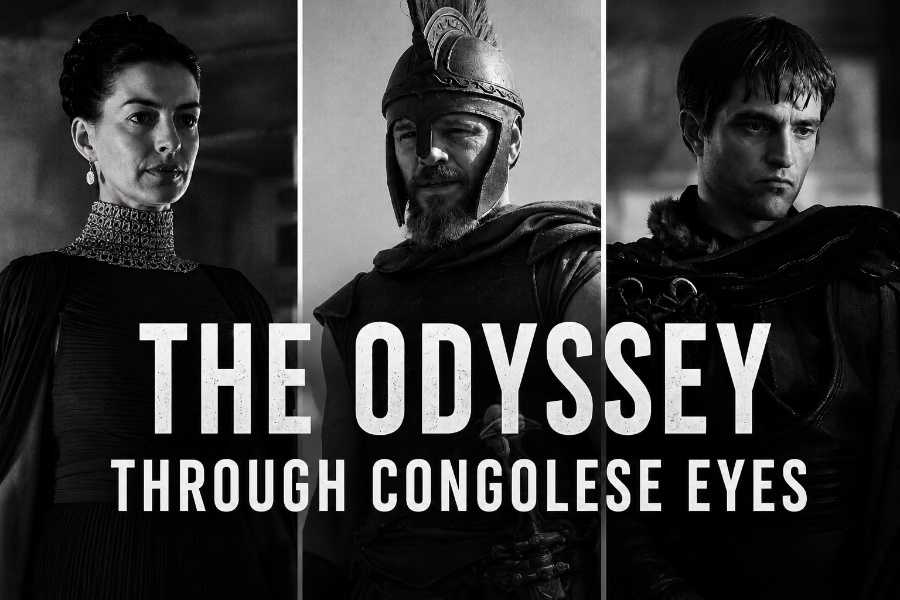
A Familiar Story for the Congolese Diaspora
Migration is often described through statistics. How many people left? Where did they settle? How much money does the diaspora send home? But statistics do not capture the emotional reality of living between places.
There are Congolese people who have spent decades abroad while still calling Congo “mboka.” There are children of the diaspora who know Kinshasa through summer holidays, WhatsApp calls, family stories and music before ever experiencing everyday life there themselves.
There are also families spread across several countries. One sibling in Belgium. Another in France. An uncle in Canada. Cousins in Congo. A WhatsApp group somehow connecting everyone.
In that sense, the idea at the heart of The Odyssey becomes surprisingly contemporary.
Distance changes relationships. Time changes people. And returning home is not necessarily the end of the journey. Sometimes it creates entirely new questions.
Odysseus, Resilience and the Congolese Mentality
Another element that may speak strongly to Congolese audiences is resilience. Odysseus survives because he adapts. Again and again, his plans collapse. He encounters situations he cannot control. He loses people. He makes mistakes. He has to rethink his strategy and continue moving. There is something deeply relatable about that.
Congolese people have developed an extraordinary culture of adaptation. It exists in Congo and throughout the diaspora.
When circumstances change, people find another way. When systems fail, people improvise. When life becomes difficult, humour somehow survives.
Anyone who grew up around Congolese families knows how quickly a difficult situation can become a joke at the dinner table. It does not mean the difficulty is ignored. Humour becomes part of surviving it.
There is also that very Congolese ability to arrive somewhere completely new and create community almost immediately. Find another Congolese person. Exchange numbers. Discover that somebody knows somebody’s cousin. Suddenly, you are connected.
Odysseus survives his journey through intelligence, instinct, relationships and persistence rather than strength alone. That makes his story more interesting than the traditional image of the invincible hero.
From Greek Oral Tradition to African Storytelling
There is another fascinating connection between The Odyssey and African cultures: oral storytelling.
Long before The Odyssey became a text studied in schools and universities, the story belonged to an oral tradition. It was performed, remembered and transmitted.
That should feel familiar to many African audiences. Across the Congo and the African continent, history has also travelled through voices. Stories are carried by parents and grandparents. Proverbs contain lessons. Music preserves memories. Family histories are repeated across generations.
In Congolese culture especially, music has often functioned as much more than entertainment. Artists tell stories about society, love, migration, politics, family and everyday life. A song can preserve the atmosphere of an entire generation. Our great musicians are storytellers too. The instruments are different. The language is different. The stage is different.
But the human instinct is the same.
Penelope and the People Who Stay Behind
It is easy to focus entirely on Odysseus because he is the traveller.
But every migration story has another side: the people who remain. Penelope waits in Ithaca while Odysseus is away. That part of the story can carry particular meaning for Congolese families separated by migration.
When someone leaves, they are not the only person experiencing the consequences. Parents wait. Partners wait. Children grow. Relatives celebrate weddings, births and funerals without everyone being able to attend.
Technology has made distance easier, but it has not eliminated it. A video call from thousands of kilometres away is still not the same as sitting together.
This is something many diaspora families understand intimately.
What Does It Actually Mean to Return?
Perhaps the most interesting question raised by The Odyssey is not whether Odysseus will return home. It is what returning home actually means. This question becomes especially powerful for Congolese people abroad.
Imagine leaving Kinshasa at 20 and returning permanently at 40.
Is it still home? Of course. But you have changed. The city has changed. Your relationships have changed. Even your expectations of everyday life may have changed.
This is one of the strange realities of diaspora identity: sometimes you miss a version of home that exists partly in memory.
A street. A neighbourhood. Sunday afternoons with family. The smell of food coming from the kitchen. Lingala conversations happening simultaneously from every corner of the room. Music playing somewhere in the background.
Those memories become frozen while real life continues.
So the return becomes emotional rather than simply geographical.
Why Ancient Stories Still Matter
One of the remarkable things about The Odyssey is that a story created thousands of years ago can still speak to audiences whose lives look completely different.
A Congolese viewer does not need to see Kinshasa on screen to recognise something familiar.
That is the power of storytelling.
The best stories cross geography because they deal with emotions people recognise everywhere: separation, temptation, ambition, grief, loyalty, family and the desire to belong somewhere.
Greek mythology may provide the setting, but the emotional questions are universal. Where is home? Who are we when we leave it? Who do we become while we are away? And after everything we experience, can we ever truly return to the person and place we remember?
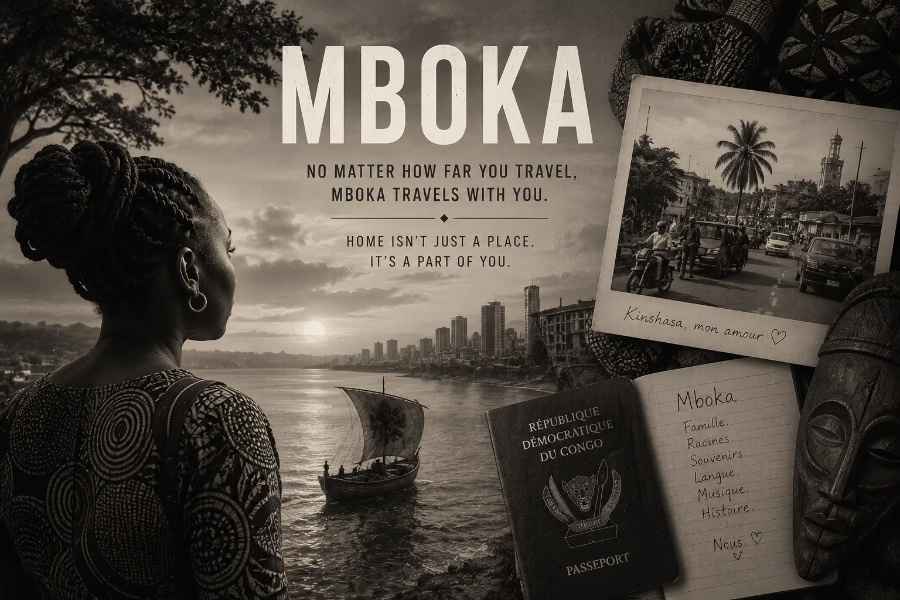
A Congolese Reading of The Odyssey
Watching The Odyssey through Congolese eyes makes the story feel less distant than expected.
It becomes a story about migration. About diaspora. About family. About adapting to circumstances you cannot control. And above all, about the strange gravitational pull of home.
Maybe that is why Odysseus’ journey has survived for so long.
Most of us are travelling toward something. For some people, it is opportunity. For others, safety, success, family or belonging.
And for millions of people living far from the place where their story began, there is always another journey happening quietly in the background, the journey back.
For Congolese people around the world, we already have a word for that place.
Mboka.
No matter how far you travel, somehow, mboka travels with you.
Enjoyed reading this? You might also enjoy our take on Michael, where we look at the film through a critical lens and explore the story behind one of the most influential artists of all time.