
Tianora Coincidence or Destiny? The Unexpected Rise of Tianora and “Anatello” in Greek Eurovision 2026
The Greek Eurovision selection has accustomed audiences to big productions, established names, and entries carefully built months in advance. And yet this year, the most talked-about presence didn’t come from a seasoned star, but from a creator who appeared almost out of nowhere. Tianora, with the song “Anatello,” managed to reach the final without campaigns, without strategy, and without even the slightest intention of chasing a spot on the Eurovision stage.
A demo from Santorini that caught fire
“Anatello” began as a simple demo, written in Santorini, an island that often inspires artists, but rarely sends songs to international competitions. Tianora recorded it without expectations, more as a personal confession than a potential hit. And yet, the track somehow found its way to the Greek selection committee and, almost unexpectedly, ended up in the final.

The song that divided opinion: mysticism, “na-na-na,” and hidden meanings
“Anatello” sounds like nothing we’re used to. The distinctive “na-na-na” in the chorus has become a talking point: some listeners find it hypnotic and atmospheric, while others consider it overly minimal.
Behind this simplicity, however, lies a deeper theme. The song speaks of rebirth, of a cycle closing and reopening, of an inner transformation that is never stated outright but suggested through imagery and sound. Even Tianora’s artistic name has been interpreted as a symbol of the cycle of life, a detail that only adds to the mystery surrounding her presence.
The composer behind “Anatello”, the man who avoids the spotlight
Behind the song is a creator who rarely appears in public. The composer of “Anatello” is known for his atmospheric writing and for working far from the studios of major cities.
His music is characterized by:
- experimental electronic textures
- traditional Greek scales
- a cinematic feel
- an emphasis on emotional imagery rather than conventional song structure
He has said that Santorini “writes music on its own,” hinting that the island played a decisive role in the song’s creation. “Anatello” was not written for a competition; it was written to capture a personal moment. Perhaps that’s why it sounds so different.

Why it excites and sparks backlash
Tianora’s story has turned into an opportunity. A demo never meant for anything beyond a private moment suddenly found itself at the center of the biggest music conversation of the year.
Maybe “Anatello” is a stroke of genius born purely by chance. Maybe it’s simply a beautiful story that found the right timing. What’s certain is that what comes next will be interesting — and may reveal whether Tianora is a one-off surprise or an artist here to stay.
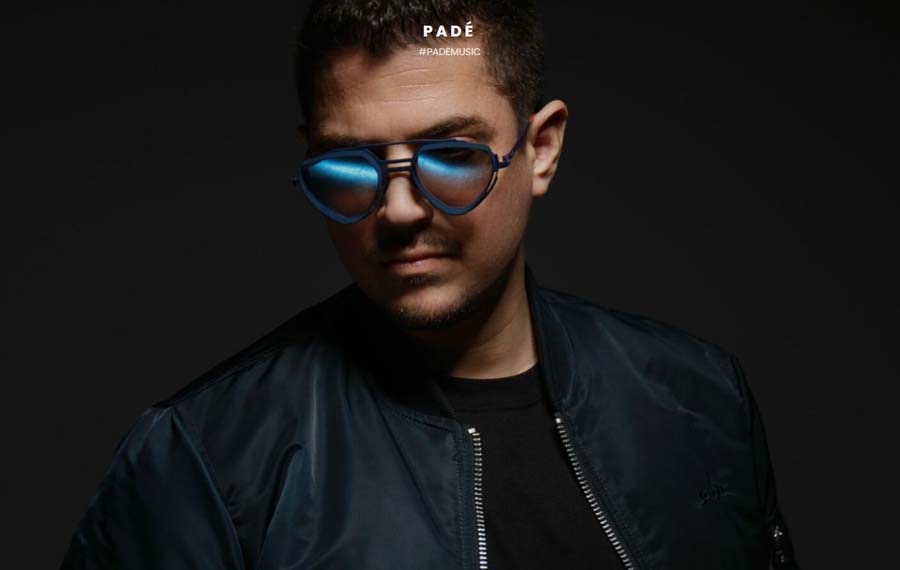
Who is Pantelis Loupasakis (Padé)?
Artistic profile & musical identity
Pantelis Loupasakis is a Greek music producer, composer, and DJ, internationally known by the stage name Padé. Born on May 25, 1987, he has built a distinctive career blending Greek and French influences, with a strong presence in the deep house and indie dance scenes.
He began his career as a sound designer for French television productions, gaining high-level technical expertise. His music is marked by ethnic elements, atmospheric soundscapes, and a cinematic aesthetic qualities that set him apart on the international electronic music scene. He lives and works in France, while maintaining a strong connection to Greek musical culture.
Discography & international success
His breakthrough came with the single “The Olive (In the Air Tonight)”, released on KSHMR’s Dharma Worldwidelabel, a subsidiary of Spinnin’ Records. The track received support from top DJs including:
- Nicky Romero
- R3HAB
- Dimitri Vegas & Like Mike
- Lost Frequencies
- Sam Feldt
- Blasterjaxx
Other notable releases include “Time Flies,” “The Olive,” and various collaborations with international producers.
Collaborations with Greek artists
Loupasakis has worked with some of the biggest names in the Greek music scene, including:
- Helena Paparizou
- Yianna Terzi
- Claydee
- Melisses
- Paschalis Terzis
His collaboration with Claydee on “Alena” is considered a particularly significant moment in his career.
Audiovisual work & recognition
According to IMDb, he composed music for Klavdia’s music videos (“Lonely Heart,” “Edo Gyrnao”) in 2022, further expanding his presence in audiovisual projects and international recognition.
Table of Contents
Read the original article in Greek on thermaiko.eu.
Fans of Greek music may also enjoy reading about Villy Razi.