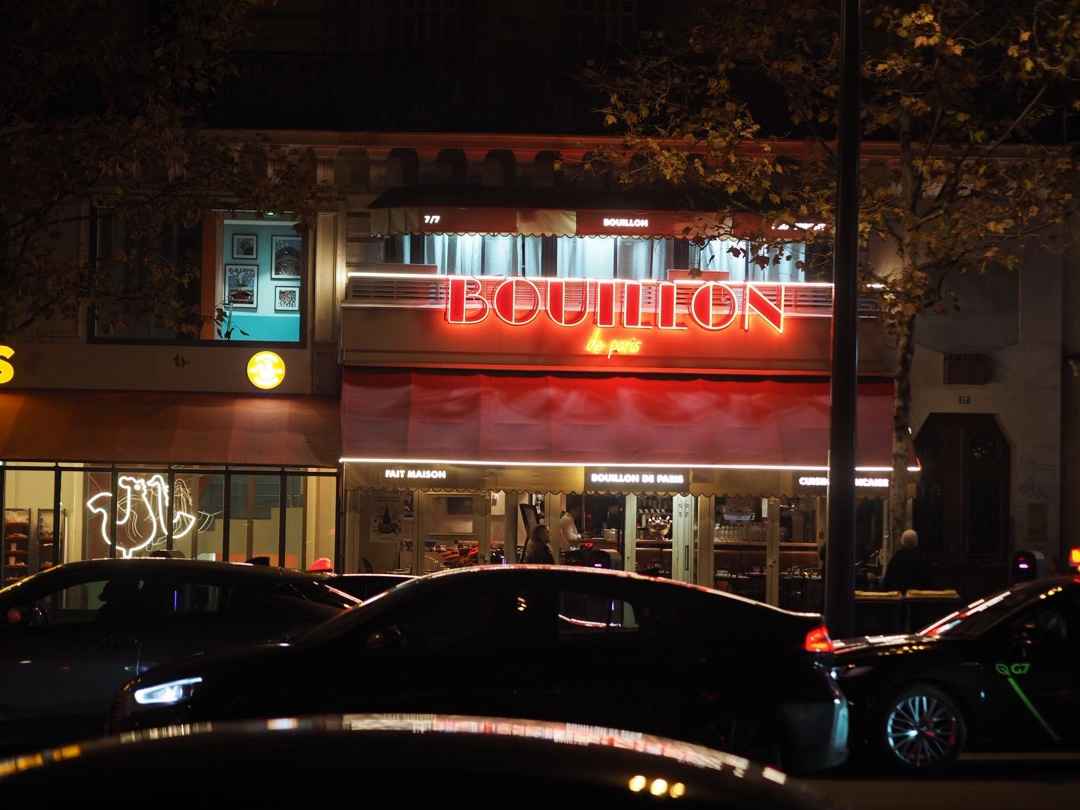
The bouillons of Paris – From 1855 to their 21st century revival
The bouillons of Paris are a uniquely Parisian dining tradition. Affordable, lively, historic restaurants serving classic French comfort food. A bouillon originally referred to a working-class restaurant in the late 19th century where customers could get simple, hearty dishes. Founded in 1855 when butcher Pierre-Louis Duval began serving workers a cheap meal centred on broth and boiled beef. They were meant to be fast, inexpensive eateries for labourers and clerks, essentially the first French “chain restaurants.” By the early 1900s, Paris had hundreds of bouillons, many operated by the Duval or Chartier families. They became known for Art Nouveau architecture, tiled walls, mirrors, long communal tables and lively dining rooms.
The 21st century bouillon revival
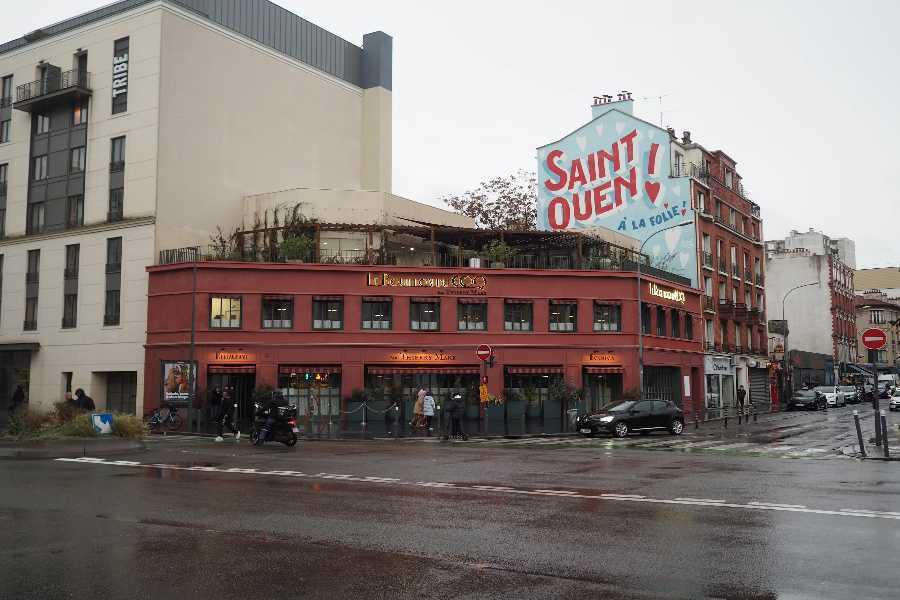
After nearly disappearing in the 20th century, The bouillons of Paris and their tradition have had a huge revival in the 21st century, by the opening of more Bouillon Chartier, and the entry of new options like Bouillon Pigalle, and Bouillon République that opened very recently in 2021, proving strong demand for the concept. Their winning formula is simple: a combination of affordable pricing with a nostalgic Belle Époque ambiance.
The bouillons of Paris – Victims of their success
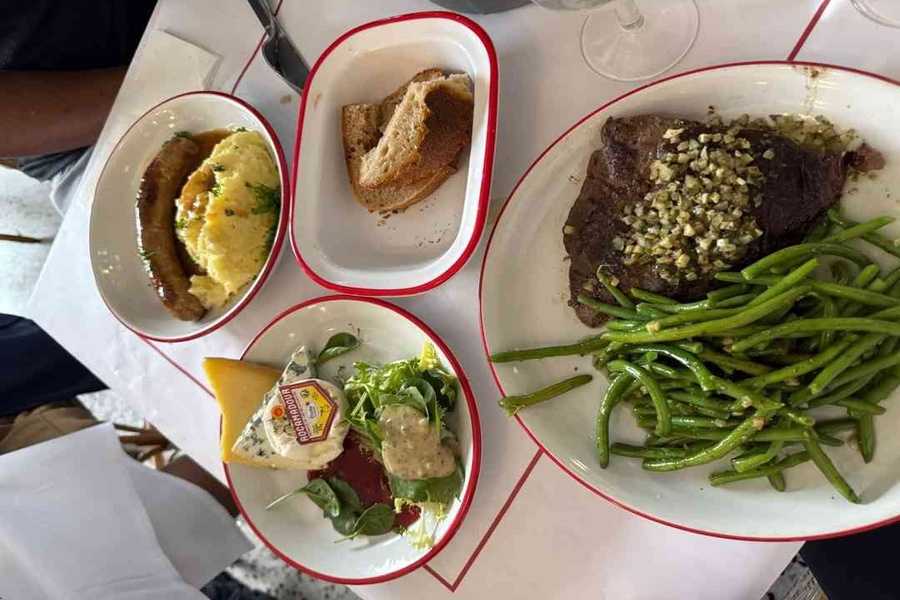
What they’re like today:
- Very affordable compared to most Paris restaurants. In the bouillons starters typically cost €2–5, main courses €8–12, desserts €3–5, and a full three-course meal usually runs around €15–25 per person, excluding drinks. They usually have an inexpensive wine selection.
- Fast-paced and usually no reservations. This also translates to long queues at certain times.
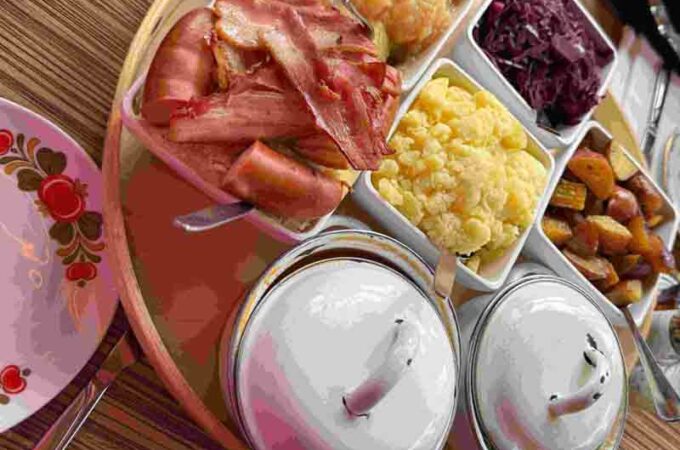
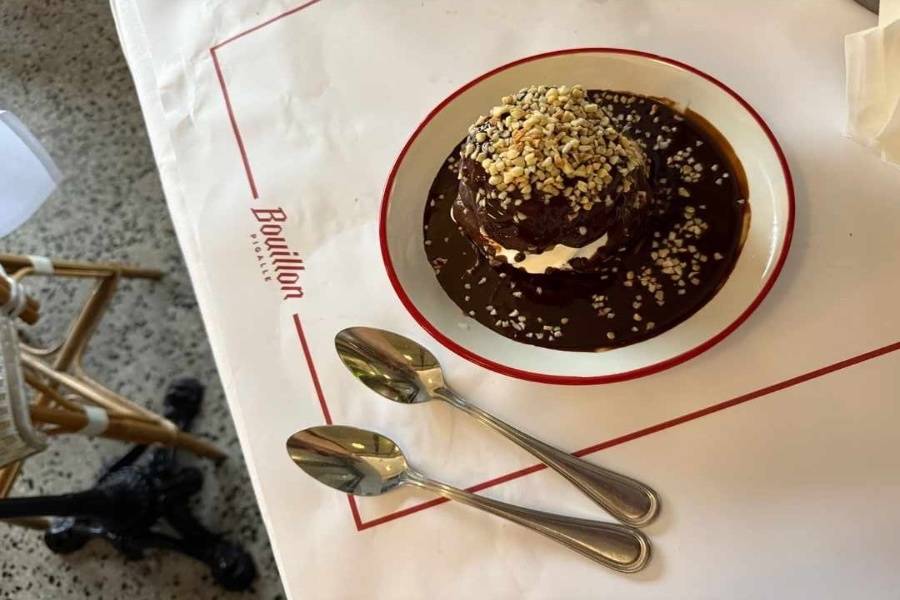
- Known for classic French dishes like œufs mayo, and onion soup for starters, boeuf bourguignon and steak frites for mains and of course the famous profiteroles and île flottante for desserts.
The recent boom has turned what were once fast, bustling canteens into must-visit destinations, especially in central Paris. Long queues, packed dining rooms and highly standardised cooking are now part of the experience at the most famous addresses. To keep prices low while serving huge volumes, many bouillons rely on simplified menus and industrial efficiency, which can make the food feel less special. That said, this isn’t a betrayal of the tradition so much as a tension between today’s expectations and the bouillon’s original purpose: feeding a lot of people, quickly and cheaply.
Bouillons Worth the Detour
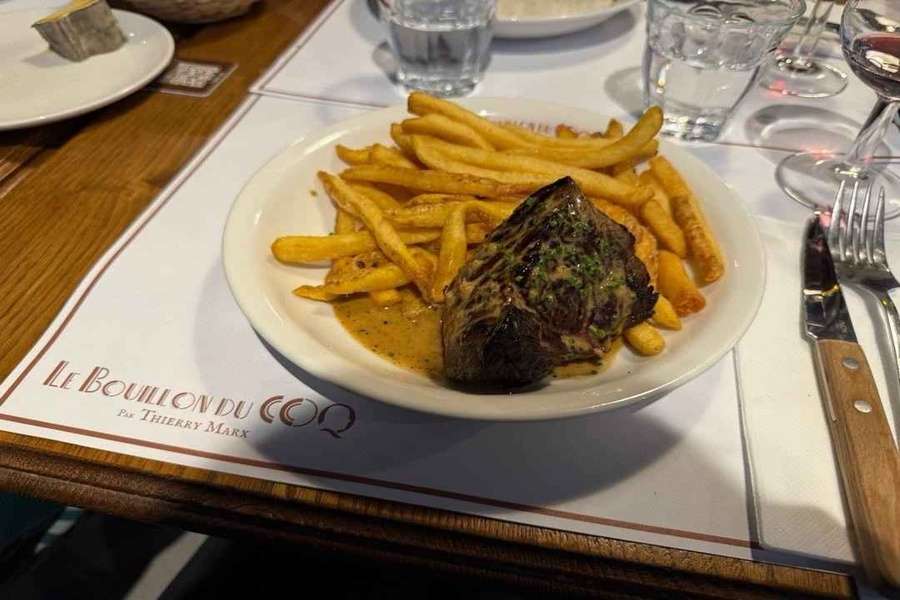
Bouillons outside the hyper-central neighbourhoods tend to feel calmer, more local and closer to the original spirit. Le Bouillon du Coq in Saint-Ouen is a good example, still affordable and efficient, less overwhelmed by crowds and tourism and with better quality than many. Exploring these slightly off-centre bouillons can offer the same comforting classics and convivial atmosphere, without the queues or the feeling that the place is running on sheer momentum alone.
Paris on a plate
Despite their evolution and occasional excesses, the bouillons of Paris remain one of the most accessible ways to experience the city at the table. They are not reserved for insiders, nor designed solely for visitors, but function as rare shared spaces where locals, tourists and regulars all eat the same dishes at the same prices. Whether in the city centre or just beyond it, bouillons are worth the experience precisely because they are open to everyone, offering a simple, unfiltered snapshot of everyday Parisian dining.
Did you like this article about the bouillons of Paris? Then you might enjoy reading Carette, a salon de thé that became a hot-chocolate institution in Paris. Do you prefer reading in greek? Then check our translated articles on https://thermaiko.eu/le-bouillons/